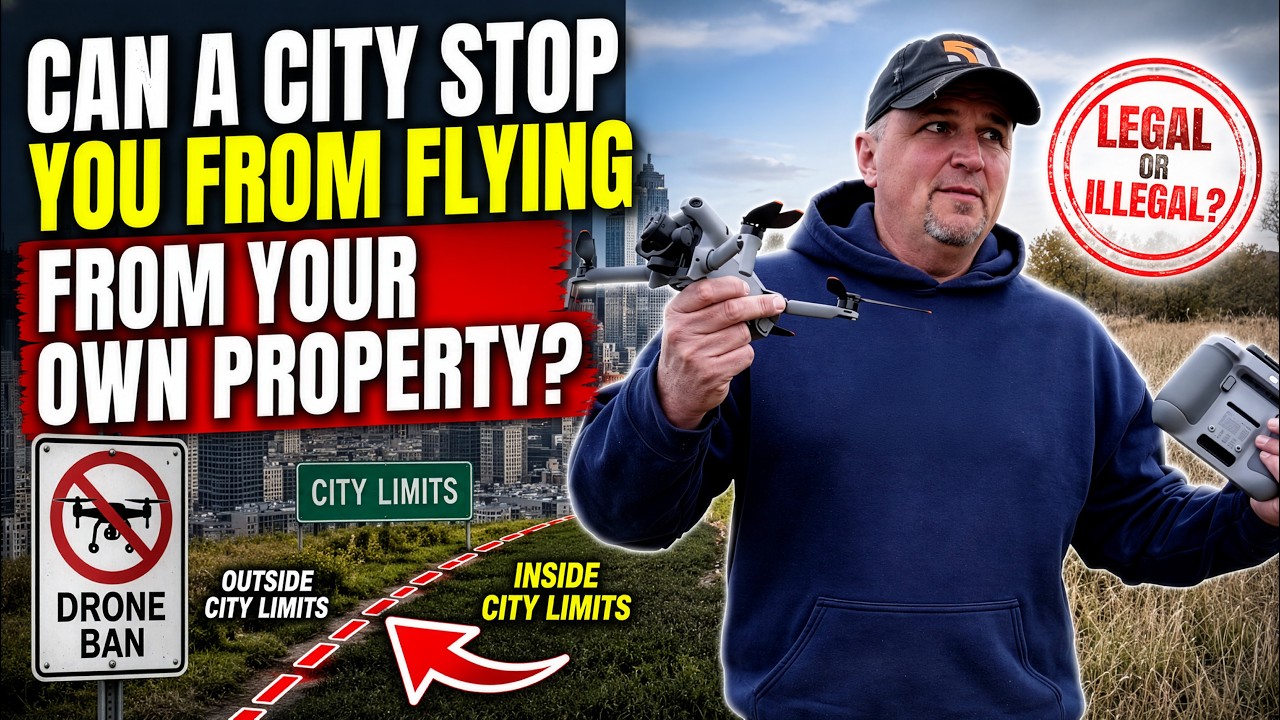
More Cities Are Restricting Drones Every Year
Over the last few years, cities and local communities across America have been adding more drone restrictions. Some of these rules are narrow and specific. Some seem reasonable. But others look suspiciously like outright drone bans.
Here’s the key issue: The FAA alone controls navigable airspace in the United States. This is federal jurisdiction—not city, county, or state jurisdiction. The FAA has repeatedly stated that local governments generally cannot regulate aviation safety or airspace operations.
But here’s where it gets complicated. Local governments absolutely do have authority over land use. They control parks and public property. They can enforce nuisance laws. And they can decide where people may physically stand or operate a drone.
The exact wording of local drone laws can completely change the legal implications.
The Strange Legal Collision Happening Now
This creates a strange legal collision across America. The FAA controls the sky, while cities are increasingly trying to control access to it from the ground.
This isn’t just theory anymore. New York City is the most famous example. In New York right now, drone takeoff and landing is heavily restricted. You can only launch from specifically authorized locations. Even if you have FAA airspace authorization, you still may not have a legal place to launch from.
Newer examples are popping up around the country too. Local communities are proposing park bans, launch bans, and restrictions around schools and public buildings. Some laws appear carefully crafted to avoid directly challenging the FAA.
Instead of saying “You can’t fly over the city,” they say “You can’t launch from here” or “You can’t land here.” This wording matters enormously.
Why Wording Is Everything
Cities are banning launching from parks, restricting operations from public property, and in some cases, they’re trying to make drone flying nearly impossible within city limits.
A city ordinance that says “No drone may launch or land from city parks” is probably on stronger legal footing. Cities generally control their own property.
But change the wording slightly. What if a city says “No drone may operate within the city limits”? Now you’re entering federal preemption territory. The city is no longer just regulating land use. It may be attempting to regulate federally controlled airspace operations.
Legal precedent exists that matters here. Courts have already struck down overly broad local drone bans. The Newton, Massachusetts case is one example—a federal court struck down portions of a local drone ordinance because the rules effectively created what the court described as an essential ban on drone use.
This is why the exact wording of local drone laws is so important. Many drone pilots and lawmakers misunderstand how this legal battle actually works.
The Legal Reality: FAA Controls Sky, Cities Control Ground
The legal landscape for drones in America is split right down the middle. Understanding this split is crucial for anyone who wants to fly a drone legally.
Who Controls What?
The answer is clear at first glance, then gets murky fast.
The FAA alone controls navigable airspace in the United States. That is federal jurisdiction, not city jurisdiction, not county, not state.
The Federal Aviation Administration has exclusive control over the sky. The FAA has repeatedly stated that local governments cannot regulate aviation safety or airspace operations. This is federal law, and it applies everywhere in America.
But here’s where it gets complicated.
Local governments absolutely do have authority over land use. Parks, public property, things like nuisance laws, and where people may physically stand or operate a drone from.
Cities and towns can control what happens on their property. They control parks. They control public buildings. They can make rules about where people stand and what they do on public land. This is local authority, and it’s real.
The Strange Collision
This creates an unusual legal problem across America. The FAA controls the sky. Cities are trying to control access to the sky from the ground.
It’s not just theory anymore. New York City is the most famous example. In New York, drone takeoff and landing is heavily restricted. You can only launch from specifically approved locations. Even if the FAA says you can fly in that airspace, you still may not have a legal place to launch from.
Other cities are following suit. Local communities are proposing park bans, launch restrictions, and rules around schools and public buildings. Some laws look carefully designed to avoid directly challenging the FAA.
Instead of saying “You can’t fly over the city,” they say “You can’t launch from here” or “You can’t land here.” That wording matters enormously.
Why Words Matter More Than You Think
What if the real legal battle isn’t about who controls the sky, but about who controls access to it from the ground beneath your feet?
A city rule that says “No drone may launch or land from city parks” is probably legally solid. Cities control their own property.
But change the wording slightly. What if a city says “No drone may operate within city limits”? Now you’re entering federal territory. The city is no longer just controlling land use. It’s trying to regulate federally controlled airspace.
Courts have already struck down overly broad drone bans. In Newton, Massachusetts, a federal court rejected portions of a local drone ordinance. The court said the rules created what it called an “essential ban” on drone use in the city.
That case matters because it shows local governments have limits. But even that case didn’t fully answer the biggest question: Can a city ban all drone launches and landings from private property?
That question remains surprisingly unsettled in American law.
The Real Battle
The legal fight happening now isn’t really about who controls the sky. Both sides agree the FAA controls airspace. The real fight is about who controls access to the sky from the ground beneath your feet. Can cities restrict where you launch from? Can they control where you land? These questions are still being decided in courtrooms across America.
This is why understanding these rules matters. The law in this area is still very gray. Many drone pilots and lawmakers misunderstand how federal airspace law actually works. As more cities pass drone restrictions, this confusion will only grow.
Practical Workarounds: Launch Outside, Fly Over
When a city restricts drone launches from parks or public spaces, the legal picture changes dramatically if you launch from outside the city boundary instead. This simple shift creates a powerful workaround that many drone pilots don’t realize is available to them.
The Legal Loophole: Launch Outside, Fly Over
Here’s the key insight: What if you launch legally from right outside the city boundary, and then you simply fly over the city while maintaining visual line of sight and complying with all FAA rules?
What if you launch legally from right outside the city boundary, and then you simply fly over the city while maintaining visual line of sight, complying with all FAA rules?
The moment your drone leaves the ground outside city limits, the legal situation shifts. Your drone is no longer launching or landing from inside the city. This matters because cities can only regulate what happens on their property and within their jurisdiction.
Why Cities Can’t Ban Overflights
The FAA does not recognize invisible municipal airspace borders. Airplanes, helicopters, and drones are all aircraft under federal law. Aircraft pass over cities all the time. If your flight complies with FAA rules, many legal experts argue that cities have a much weaker legal basis to prohibit the overflight itself.
The FAA does not recognize invisible municipal airspace borders.
This is an important distinction. Cities can ban launches from their parks. They can restrict operations on public property. But once your drone is in the air and flying FAA-compliant patterns, the city’s authority becomes questionable.
Important note: This is not guaranteed to be 100% legal everywhere. State laws matter. Local wording matters. There are still unresolved legal gray areas involving privacy laws, nuisance laws, and low-altitude operations. But this is exactly why this discussion matters. Many communities believe they are banning drones from their skies when legally they may only be regulating where pilots physically stand.
Real-World Example: Lakewood, Colorado
Let’s look at a practical example. Lakewood, Colorado restricts launching and landing on public parks and wide-open spaces. But imagine you’re visiting a friend and want to capture aerial footage of O’Kane Park.
You can launch the drone from this driveway and you can fly over O’Kane Park in Lakewood, Colorado.
Here’s what you can do: If your friend lives in a house right next to the park, you can launch from their driveway. You can then fly over O’Kane Park and capture footage. The city has no authority to stop you because you’re not launching from public property. You’re launching from private property outside the park boundary.
Will a police officer give you a hard time? Maybe. It depends on the officer. But technically, as long as you’re not on public property, you have every right to fly over that park.
Another Example: Lakeville, Minnesota
Lakeville, Minnesota has over 100 parks and public gathering areas. The city does not allow drones to launch and land in parks without a permit. The permit costs about $10.
But here’s the workaround: If you want to capture footage of a Veterans War Memorial located in Aronson Park, you don’t have to pay the permit fee. You can launch from Saint John’s Church parking lot nearby. From there, you can fly over the park and capture aerial footage of the memorial.
Technically, you’re not flying from within the park, so you can get the footage without paying the permit fee.
If you’re launching from private areas, there’s really nothing that they can do.
The Practical Reality
This workaround works because cities can only control their own property and what happens within their jurisdiction. They cannot control the airspace above their city if the flight is FAA-compliant. The legal battle isn’t really about who controls the sky. Both sides agree the FAA controls airspace. The real battle is about who controls access to the sky from the ground beneath your feet.
By launching from private property outside city limits, you sidestep the city’s authority over ground-based activity. Your drone then operates in federally controlled airspace where the FAA rules apply, not local restrictions.
This approach gives drone pilots a practical path forward in cities with increasingly strict launch and landing rules. It’s a simple but powerful workaround that respects both federal airspace authority and local property rights.
The Future Battle: Ground Access vs. Airspace Control
Both sides of the drone debate are rushing forward without fully understanding the legal landscape. This is creating a collision course that will likely end up in courtrooms across America.
Two Misunderstandings
Drone pilots often make one critical mistake. They assume the FAA controls the sky, so local laws don’t matter.
Drone pilots need to stop assuming that the FAA controls the sky, so local laws don’t matter. That’s simply not true.
This is wrong. Local property rules matter. Park rules matter. Trespassing laws matter. State laws matter. Just because the FAA controls airspace doesn’t mean you can ignore local authority over land.
But cities are making their own mistake too.
Local governments also need to understand that they probably cannot simply create their own independent FAA.
Cities cannot pass broad operational bans on drones. When they try, they risk triggering major federal preemption lawsuits. Courts have already struck down overly broad local drone restrictions. If cities keep pushing, they will face expensive legal battles they’re likely to lose.
The Patchwork Problem
Right now, America is creating a patchwork system. Every city has different drone rules. Every community has different launch restrictions. Enforcement philosophies vary wildly from place to place.
This creates real problems. Recreational pilots get confused. Commercial operators struggle to comply. Even the FAA finds it difficult to manage a system where rules change every few miles.
The Unresolved Question
At the heart of this debate sits one huge unanswered question:
Can local governments control access to federally regulated airspace by controlling every possible place that a drone can legally take off and land? Because that may ultimately be where the future legal battle happens, not in the sky, but on the ground beneath it.
This is the real issue. The future legal battle won’t be about who controls the sky. Both sides agree the FAA controls airspace. The battle will be about who controls access to that airspace from the ground.
Can cities ban all drone launches from private property? Can they restrict landings everywhere within city limits? Can they effectively eliminate drone operations by controlling every possible launch and landing spot?
These questions remain legally unsettled.
A Call for Thoughtful Discussion
Before more lawsuits emerge, both sides need to have an honest conversation. Drone pilots need to respect local property rights and community concerns. Cities need to understand the limits of their legal authority.
This legal gray area will only become more important in the coming years. Whether you love drones or dislike them, this issue affects your community. The decisions made now will shape drone policy for decades to come.
The fight is just beginning. What happens next depends on whether we can find thoughtful solutions together—or whether we’ll spend years and millions of dollars in courtroom battles.
Flying Over Cities While Launching from Outside Boundaries
Here’s an interesting legal scenario: what if you launch your drone legally from just outside a city boundary, then fly it over the city while keeping it in sight and following all FAA rules? The legal picture changes dramatically.
Why Location Matters
The key difference is where your drone takes off. If you launch from outside the city limits, the city’s ground-based restrictions don’t apply to you. The drone is no longer launching or landing from inside city property.
What if you launch legally from right outside the city boundary, and then you simply fly over the city while maintaining visual line of sight, complying with all FAA rules? Now suddenly the legal picture changes dramatically.
The Federal Airspace Argument
Here’s what strengthens your legal position: > The FAA does not recognize invisible municipal airspace borders. Aircraft pass over cities all of the time.
Helicopters, airplanes, and drones are all aircraft under federal law. They regularly fly over cities. If your flight follows all FAA rules, legal experts argue that cities have much weaker grounds to prohibit the overflight itself.
If the flight itself is FAA compliant, then the city may have a much weaker legal basis to prohibit the overflight itself.
Important Caveats
This doesn’t mean it’s guaranteed legal everywhere. Several factors still matter:
- State laws may add their own restrictions
- Local wording of ordinances can change the legal outcome
- Gray areas remain around privacy laws and nuisance laws
- Low-altitude operations have their own legal complications
Many communities believe that they are banning drones from their skies when legally they may only be regulating where the pilots are physically standing.
The bottom line: launching outside city limits and flying over restricted airspace is a more defensible legal position than launching from inside the city. But the law in this area is still evolving, and specific circumstances matter greatly.